
Estimated reading time: 10 minutes
Whether you’re looking for a racing, realtor, photogrammetry, wildlife monitoring, or journalism drone, you’ll find the best option here.
You must buy one designed for that particular task to get the most out of your drone. Even so, some high-end drones perform various tasks but have a high price tag.
For example, the Matrice 30T is a high-end drone used in search and rescue missions, but it can also be used in agriculture, construction, and mining. DJI Air 3 is good for photogrammetry, DJI Mini 3 is great for roofing, DJI FPV is good for racers, and Phantom 4 Pro V2.0 is good for journalists. The DJI Mavic 3 Pro is great for wildlife, and the DJI Mini 4 Pro is great for travel.
This guide will review these drones and explain why they’re the best for their respective applications.
Let’s kick-start.
Table of contents:
- 1 . Best Drones for the Search and Rescue:
- 2. Best Drones for Wildlife Monitoring:
- 3. Best Drones for Travel:
- 4. Best Drone for Realtors:
- 5. Best Drones for Photogrammetry:
- 6. Best Drones for Roof Inspection:
- 7. Best Drones for Journalism:
- 8. Best Drone for Photography:
- 9. Best Drones For Racing:
- 10. The Best Drone for Kids:
- Parting Shot:
1. Best Drones for the Search and Rescue:
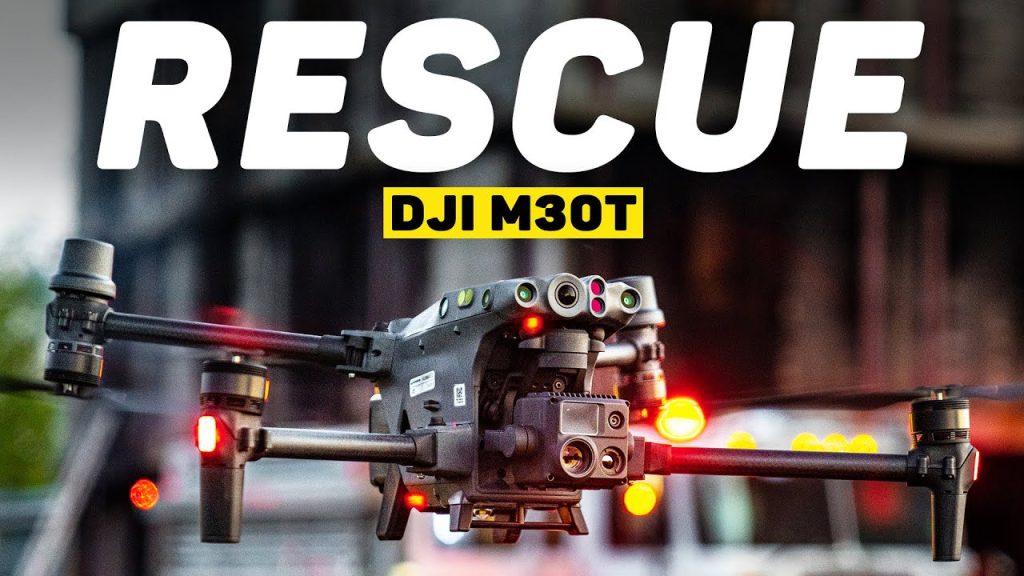
You need a powerful drone for search and rescue missions, such is the Matrice 30T. With its triple sensor system, including thermal cameras, it is a robust solution for emergency responses where data integrity and reliability are key.
It can mark subjects and send the pilot information about their location and position. It’s the most reliable drone in the toughest environments.
Matrice 30T has IP55 protection, effectively tolerating harsh weather conditions and temperatures ranging from -20° C~50° C.
The zoom, wide, and thermal cameras featuring a laser rangefinder make it possible to capture aerial data.
Even in low-light conditions, the FPV drone camera keeps the sky and the ground line visible, keeping you confident throughout the search and rescue mission.
The drone has programmable flight modes, allowing the controller to switch between modes using a ground control station or the remote control. It can fly uninterrupted for 41 minutes at a speed of 23 m/s and is resistant to wind, making it best for emergency response situations.
It has ToF sensors on all sides and dual vision, making each flight safe. The built-in ADS-B receiver sends a timely alert to the controller to avoid collisions with an incoming crewed aircraft.
ToF sensors and dual Vision appear on the sides (all six) of the drone, ensuring its safety throughout the flight. The built-in ADS-B receiver alerts pilots of incoming aircraft for timely action to avoid collisions.
Amazon Prime is giving 6-month trial for $0
All 18-24 year-olds and students welcome.
Start your six month trial
It’s a lightweight, compact, and foldable drone, so you can easily pack and carry it around in all your missions.
2. Best Drones for Wildlife Monitoring:
Mavic 3 Pro has a triple camera system featuring a 4/3 CMOS Hasselblad camera and a ½ inches CMOS Tele camera. This allows the pilot to capture amazing wildlife scenarios for fun, research, preservation, or saving endangered wildlife without disturbing it.
Pilots can shoot 12-bit raw images with a dynamic range of 12.8 stops with the Hasselblad camera. Besides, the Hasselblad saves you the hassle of exhausting post-production because it features a Hasselblad Natural Color Solution (HNCS), which is responsible for restoring the colors that favor the human eye.
The 10-bit D-Log M color mode lowers the color grading difficulty. Besides, you can record up to 1 billion colors with the D-Log mode, even in high-contrast scenarios.
This drone series offers a maximum flight time of 43 minutes. With its omnidirectional obstacle-sensing (left, front, right, and back) feature, the drone can sense and evade obstacles, ensuring safe flights at all times.

3. Best Drones for Travel:
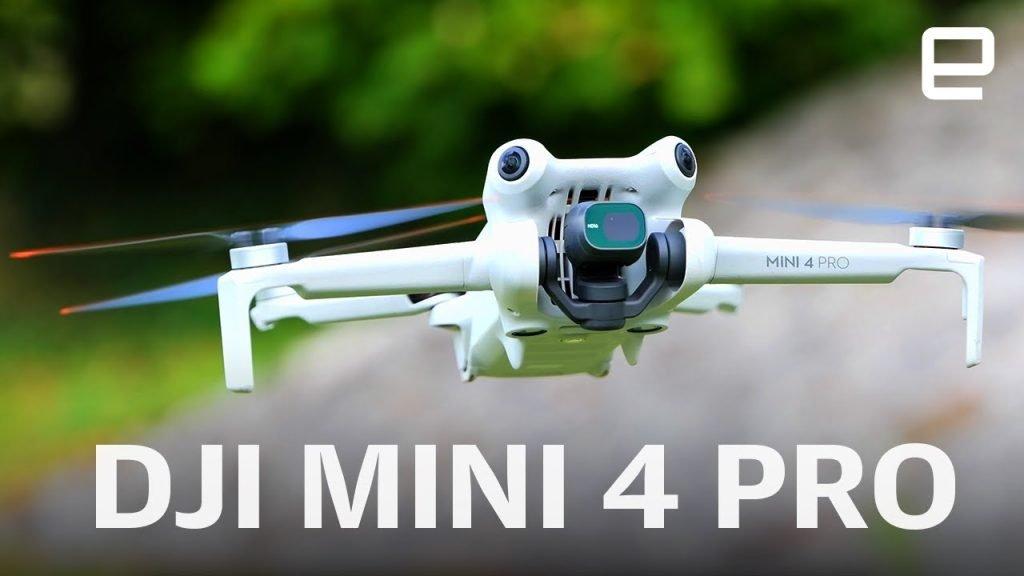
Keep those fascinating travel memories alive with the lightweight sub-250 gram DJI Mini 4 Pro. This drone features an advanced mini-camera that is sufficient for travelers.
The drone’s camera has a 1/1.3-inch CMOS sensor, which features 2.4μm 4-in-1 pixels, a Dual Native ISO fusion, and an f/1.7 aperture.
Featuring omnidirectional obstacle sensing capability, DJI Mini 4 Pro integrates safe and exceptional imaging capabilities.
On the other hand, the cruise control allows the drone to fly in any direction without the continued use of the control sticks, making long-distance flights free of distortions resulting from shaking during manual control.
The advanced Return to Home (RTH) feature enables a safe flight back to the initial (home) point, making it impossible for the drone to be lost.
Interestingly, this drone series also plans a flight route depending on the pilot’s preset waypoints. It can also repeat routes if need be.
This drone weighs less than 249 grams; hence, lightweight and convenient for travelers and campers. With such a weight, most countries and regions won’t ask you to do any examinations or training.
4. Best Drone for Realtors:
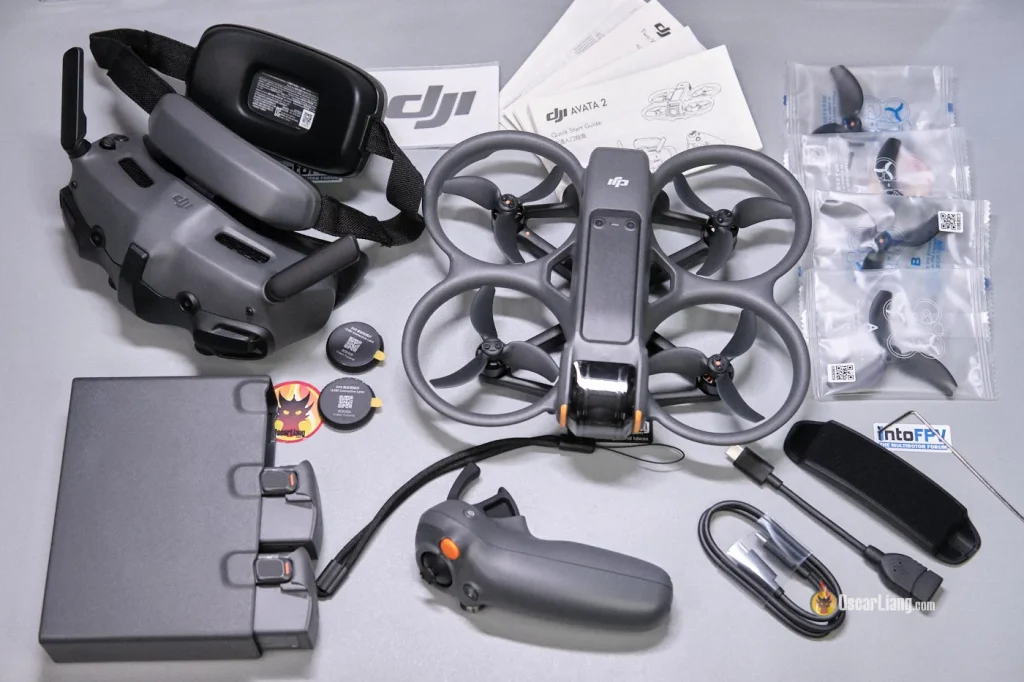
Many of you may not go with me in this, but If you’re a realtor looking into selling properties, the Avata 2 will be your best match.
Avata 2 produces excellent indoor and outdoor clips that would be ideal for posting on social media pages or websites to attract followers’ attention.
With a high-end quality camera, the Avata 2 FPV drone can capture outstanding 20-megapixel images and 4K stabilized 10-bit videos. This camera offers sharp, detailed, crystal-clear footage photos that can convert followers into potential customers!
Due to its advanced flight capability and uncompromised control and stability features, the Avata 2 FPV can easily navigate tight spaces and capture breathtaking cinematic footage efficiently.
Featuring a real-time transmission, the Avata 2 FPV drone allows the pilot to view live footage from the camera on their smartphones or FPV goggles, giving them instant feedback.
Besides, the drone combines safety, long battery life, and imaging to offer realtors an exceptional experience.
Avata 2 is friendly to both beginners and experts. You can use a motion or FPV controller to better control the turns/sweeps.
5. Best Drones for Photogrammetry:
Whether you’re looking for a drone for architecture, manufacturing, topographic mapping, cultural heritage, engineering, police investigation, or any other photogrammetry application, you need a high-end drone like the DJI M300 RTK.
Its ability to position itself steadily in moderate wind lets you focus on your cinematography, giving you the best user experience ever!
The M300 RTK comes as a platform, allowing you to attach different payloads depending on the type of imagery you want to collect. Whether you want RGB, LiDAR, or magnetic data, there is a payload for it that will work with the DJI M300 RTK. Its 360-degree obstacle avoidance capability and 40+ battery life make it the best for photogrammetry.
6. Best Drones for Roof Inspection:
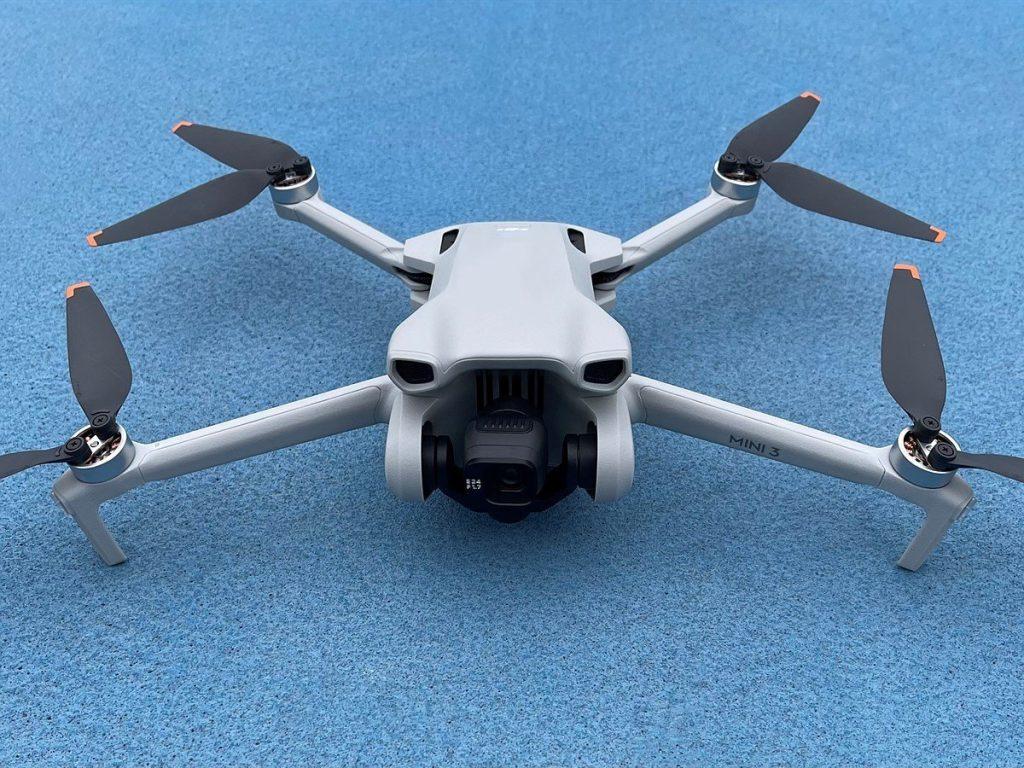
Of course, you don’t need an expensive drone for roof inspection unless you want to perform thermal inspections (the Mavic 3 Thermal is ideal for these). The DJI Mini 3 is perfect even for tight residential settings.
Because of its camera, the DJI Mini 3 is ideal for roof inspection tasks. Its larger 2.4 μm 4-in-1 pixels and f/1.7 aperture capture clear roofing details even in low-light situations. For its price and size, this is a great camera.
The DJI Mini 3 is portable and features tri-directional (downward, forward, backward, and sides) obstacle sensing. Unfortunately, like most other drones, it’s not ideal for windy conditions.
It features a maximum flight time of 34 minutes, a 4K HDR video, and a weight of less than 249 grams, which means it’s also an affordable drone.
7. Best Drones for Journalism:
Phantom 4 Pro V2.0 is a perfect match for journalists. Its 1″ CMOS sensor is great for shooting 4K/60fps videos and 20 MP images. The camera features an optimized f/2.8 wide-angle lens, which is crucial for maintaining well-detailed, sharp, vivid videos and photos without distorting the color.
Since the Phantom 4 Pro V2.0 has a mechanical shutter that prevents rolling shutter distortion, it’s the best drone for professional aerial videography and photography. This also means that it’s a great drone for mapping professionals.
The drone features an OcuSync 2.0 HD transmission system for reliability and stable connectivity.
It has a dedicated remote controller with a built-in screen for easy drone control and precise flying.
To enhance safety, the drone features a five-directional obstacle detection. Its maximum flight time is 30m minutes.

8. Best Drone for Photography:
Whether you’re into photography for fun or as a professional, you need high-quality aerial videos and photos, such as the DJI Mavic 3 Classic.
This drone has a 4/3 CMOS Hasselblad camera with a maximum video resolution of 5.1K at up to 50 FPS. It can also shoot even slow-motion videos because it allows the 4K videos to be shot at 120p.
Since it has an omnidirectional sensor object detection feature, this drone evades collisions, effectively ensuring all flights are safe.
Its maximum flight time is 46 minutes, allowing you enough time to capture every fun moment. The takeoff weight is 895 grams.
This is a Class 1 drone, so you can fly it in the Open category. Whether you want raw JPEG or DNG files, it will meet your needs. It also features a panorama mode, in which the drone captures a sequence of photos automatically stitched together, or you may use software to stitch them together.
However, if you want share-ready images that are also vibrant, use JPEGs instead of raw files.
9. Best Drones For Racing:
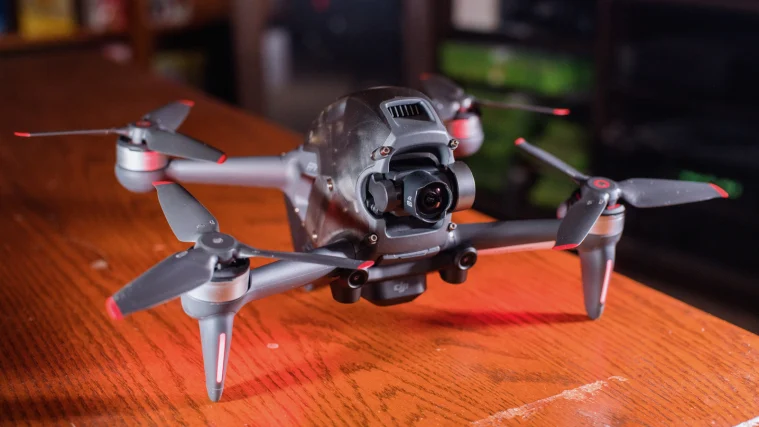
The DJI FPV wins when it comes to racing. As much as you can use the drone for other purposes, it’s best for racing because of its high speed.
As a racer, you get maximized control of your DJI FPV drone when you pair it with the DJI FPV Google V2, DJI FPV remote controller 2, and DJI FPV motion controller.
Due to its outstanding stability, this drone gives every user a safe, thrilling racing experience. The DJI FPV offers better imaging, and its user-friendly design makes it easier to work with than most FPV drones.
10. The Best Drone for Kids:
DJI Mini 2 SE is a great drone for kids aged 16 and above. It weighs only 249 grams, making it easy for teens to fly and carry around. It has an on-screen tutorial, a great add-on for teens and beginners. Sadly, it has no collision sensors, so the pilot must be extra careful when flying it.
It can be used indoors or outdoors. It features a Gimbal GPS camera, producing smooth, stunning videos and images.
Its maximum flight time is 28 minutes. The drone can shoot 4000 x 3000 pixel JPEG photos and record 2.7K videos to a MicroSD card. However, if you have younger kids and want to introduce them to drones, consider getting them the DJI Tello which allows them to learn to fly and even program a drone.
Parting Shot:
Though we have discussed several drones that are most suitable for different tasks, most of these powerful ones can be used in other fields. For example, the Matrice 30T is a powerful drone that you may use for wildlife reservations or travel industry.
When writing this review, we have considered real people’s experiences based on their careers and the drones they use in the line of duty. Consequently, we have concluded that these drones are the best selection for the jobs listed above.
However, your taste, needs, budget, preferences, and, most importantly, the laws governing your state should dictate what type of drone to buy for certain tasks.
HAPPY FLYING

Fantastic site Lots of helpful information here I am sending it to some friends ans additionally sharing in delicious And of course thanks for your effort
Thanks!!