Estimated reading time: 10 minutes
When I started flying drones, I was looking for a small drone designed for beginners—one that I could do basic stuff with and learn from before looking for a more expensive one. If you are in such a situation today, there are several options from different brands.
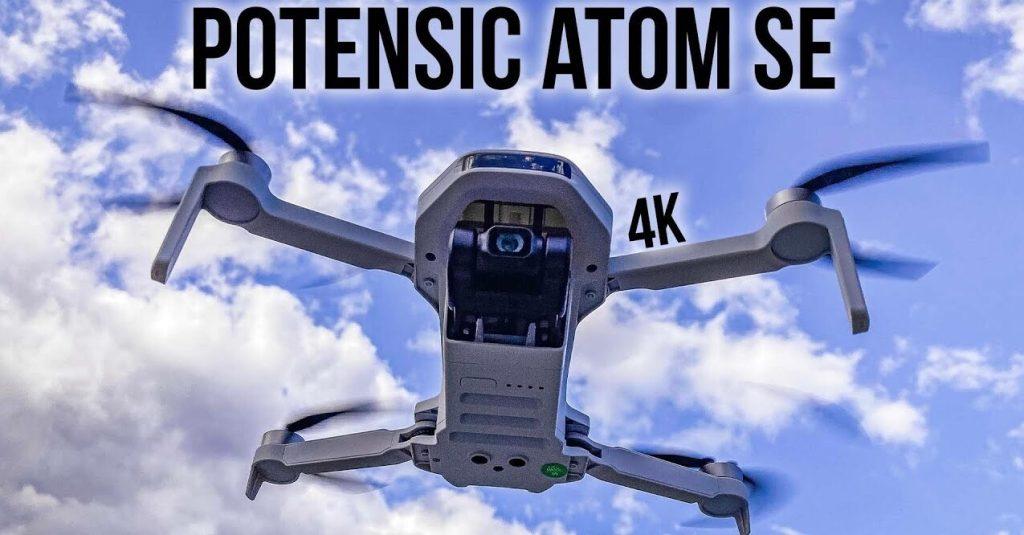
Today, I will discuss the Potensic Atom SE, a lightweight, beginner-friendly drone. But will it meet your needs? Let’s review its features, pros and cons, and some alternatives to consider.
But for a quick review, is the Potensic Atom SE worth it?
The Potensic Atom SE is a lightweight drone with a 12 MP camera and can capture 4K videos. It also comes with automatic flight modes like Waypoints and Follow Me and GPS flight stabilization. However, it lacks gimbal image stabilization, obstacle avoidance, and camera customization. It’s great for beginners but not for Pros.
Read on for a full breakdown of its features.
Table of contents
Overview:
The Potensic Atom SE is one of the drone products produced by Potensic, a company that specializes in building consumer drones. Starting in 2014.
Potensic has released a wide range of drones, including the Potensic Atom SE, Potensic Atom, Potensic Atom LT, and Potensic Atom 2. They focus on cheaper, lightweight drones that offer an easier entry point into drone technology.
What is In The Box?
The Potensic Atom SE comes as a Standard Package and a Combo. I prefer the Combo because you get a lot more bang for your back. Below is what you can expect to find in the Combo option:
- The Potensic Atom SE drone.
- Remote controller
- 2 smart batteries
- Battery charging hub
- Spare propellers
- Portable carrying case
- Connection cables
- Charging cables
- Screws and screwdriver
- User manual

Potensic Atom SE Review:
Now, let’s look at what this drone offers.
Design and Weight:
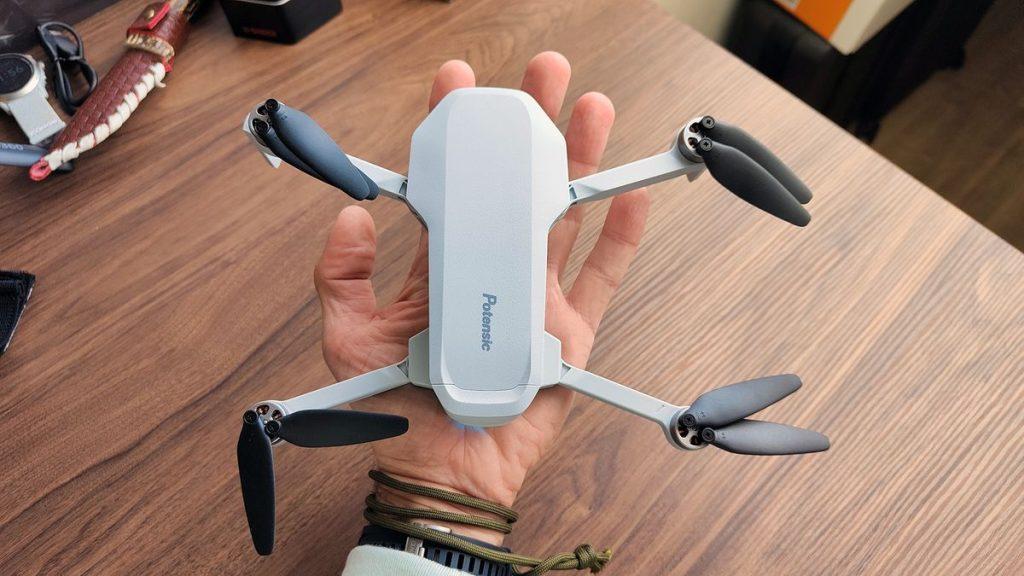
The Potensic Atom SE weighs 245 grams, making it easily portable in your backpack or pocket. If you are in the USA or in another region where drones weighing less than 250 grams are exempt from registration and licensing, then the Potensic Atom SE would be a good option.
This drone also features a foldable design, making it easy to pack for storage and also quick to deploy as you don’t have to assemble anything. Besides being foldable, it’s also quite small, measuring 3.5 by 5.6 by 2.3 inches when folded.
Camera:
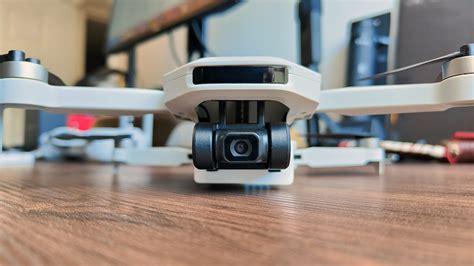
The Potensic Atm SE is a camera drone featuring a 1/3 12 MP Sony CMOS camera. It can capture videos of up to 4K at 30 fps or 1080p at 60 fps, with a 118-degree field of View.
The camera moves within a 20-degree to 90-degree, top to bottom, but it doesn’t look straight down. Being a beginner drone, this camera is good enough, and from the various tests, it produces decent footage. Unfortunately, like most beginner drones, the Potensic Atom SE has some limitations.
Amazon Prime is giving 6-month trial for $0
All 18-24 year-olds and students welcome.
Start your six month trial
- Lack of gimbal stabilization – The Potensic Atom SE lacks gimbal stabilization. Instead, the camera only moves up and down and features EIS (Electronic Image Stabilization). The EIS is limited in that it doesn’t offer a level horizon as you will find in most more expensive drones. Instead, the footage looks like it was taken by an FPV drone. This drone also lacks stabilization in windy conditions or when rolling the drone left and right, where the horizon will not be level. In calm conditions, you can fly the drone slowly to try and keep the horizon level, but this is not always effective. This drone also features a Video mode flight mode that is slower and good for filming, but the lack of a gimbal still shows if you make sudden movements.
- Limited control over camera settings – The Potensic Atom SE only comes with AUTO camera settings, and you can only customize the exposure. You can’t change the ISO, White Balance, or Shutter Speed. There are times when AUTO-works, but there are situations where you may need to tweak the camera settings a bit for better footage.
- Vignetting and noise in the images – Images gotten from the Potensic may appear vignetted along the edges, and the camera may also introduce noise in the photos, which is a drawback since you don’t have much room to control the camera settings.
Flight Time:
The Potensic Atom SE batteries offer a flight time of up to 31 minutes; with two of them, you can fly for up to 62 minutes. However, I often like to test the flight time by actually flying the drone since factors like temperature, altitude, battery health, or the flight mode and speed you are flying will affect how long the drone can fly.
In actual tests, the drone was struggling to hit 25 minutes. This could be because they tested the drone in different conditions, or I was flying in slightly windy conditions, but 25 minutes is decent for a drone of this price range.
Range:
How far can the Potensic Atom SE fly? Powered by PixSync 2.0, the Potensic Atom SE can fly up to 4 km away from the controller.
Considering its size, I wouldn’t want to fly this drone that far. Besides, most regions require such drones to be flown within a visual line of sight, which is a few hundred meters. For short-range flights, PixSync 2.0 is decent, but avoid flying the drone in areas with a lot of obstacles or electromagnetic interference.
Remote Controller:
The drone’s controller matters a lot as it’s what you will be holding during the drone’s flight. A good controller needs to be light, ergonomic, and designed for ease of use.
The Potensic Atom SE’’s controller meets these requirements as it weighs 231 grams and retracts and expands to hold smartphones of different sizes, creating a Nintendo-like design. The joysticks are also removable for easier storage within the controller.
Potensic Pro App:
Like most drones, the Potensic Atom SE uses your smartphone as the screen. To access the drone platform, install the Potensic Pro app on an Android or Apple smartphone. This lets you see what the drone sees and access other settings like flight modes, camera settings, maximum height and distance, etc.
The app is easy to use and compatible with most devices, too.
Safety Features:
The Potensic Atom SE lacks advanced safety features like Infrared or LiDar obstacle detection and avoidance. As a matter of fact, it lacks any obstacle sensors whatsoever, which makes sense as these sensors are expensive and sometimes add extra weight to the drone.
However, this drone features GPS positioning, which helps it maintain its position, making it easy for beginners to handle. It also features downward vision sensors, which help it land safely. In case of an emergency, you can use the RTH function, and the drone will fly back to its last known position.
Automatic Flight Modes:
Since it is now possible to create miniature automatic systems, it is now possible to find cheap drones with advanced features, and the Potensic Atom SE has its fair share. This includes flight modes like Follow Me, where the drone automatically follows the subject and Circle.
I was surprised to learn that it has a Waypoints feature that lets you set a couple of points in 3D space, and the drone will fly through them.
This waypoints feature doesn’t work like in the Enterprise drones, where the drone flies through a course for mapping; it’s more of a customizable automatic flight feature and one that can spice up your flight.
You can use them to have fun or create footage automatically. However, due to the lack of obstacle avoidance, be careful where you use these features to prevent the drone from crashing.
Pros and Cons:
Below is a summary of this drone’s features:
Pros:
- Lightweight & Portable – 245g, foldable, and easy to carry.
- Decent camera – 12MP Sony CMOS, 4K/30fps video.
- Good Battery Life – Up to 25 mins real-world flight time per battery.
- Extended Range – 4KM with PixSync 2.0 (best in open areas).
- User-Friendly Controller – Lightweight, ergonomic, and expandable for smartphones.
- GPS & RTH – Stable flight with auto-return for safety.
- Automatic Flight Modes – Follow Me, Circle, and Basic Waypoints.
- Affordable – Good entry-level drone for beginners.
Cons:
- No Gimbal Stabilization – EIS only, leading to unstable footage in the wind.
- Limited Camera Controls – No manual ISO, White Balance, or Shutter Speed.
- Image Quality Issues – Vignetting and noise in photos.
- No Obstacle Avoidance – Requires careful piloting.
Who Should Buy the Potensic Atom SE?
The Potensic Atom SE is a good entry-level drone and great for people looking for their first drone. The camera is decent enough, the flight time is great, and the overall design makes it easy to handle and move around with.
The FPV-style footage isn’t that bad either since FPV drones exist for that kind of footage, so if you are looking for that sort of thing, then you are lucky since you don’t have to invest in an FPV drone, either.
Who Shouldn’t Buy the Potensic Atom SE?
The lack of a gimbal, limited camera settings, and lack of obstacle avoidance may be drawbacks to some. If you would like more control over the camera or a lot more features than what the Potensic Atom SE offers, then it may not be the best pick for you.
Potensic Atom SE Alternatives:
Now that we are aware of the Potensic Atom SE’s strengths and weaknesses, let’s look at some great alternatives you can consider:
DJI Mini 2 SE:
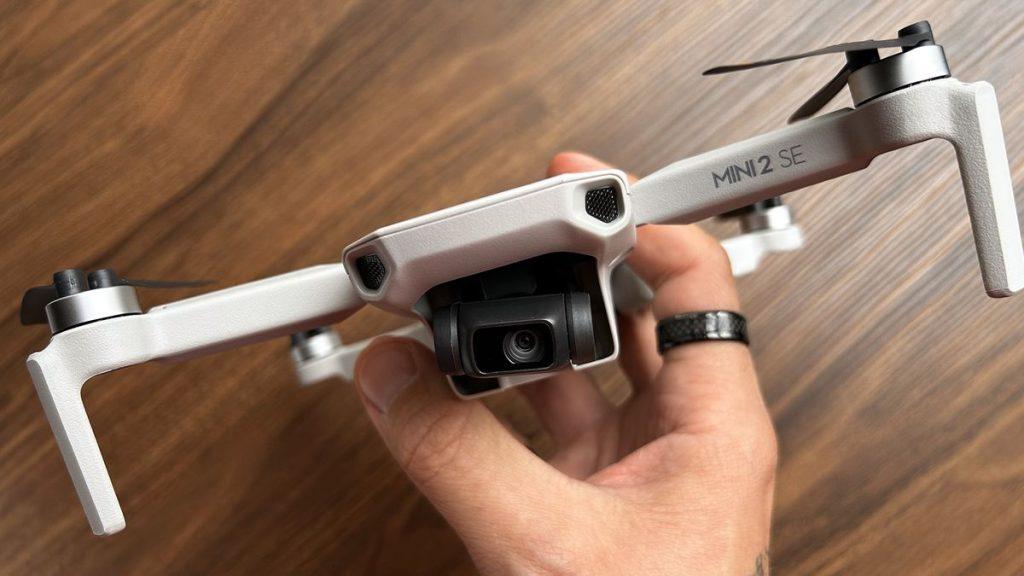
The DJI Mini 2 SE is similar to the Potensic Atom SE in that they both fit in the sub-250 gram weight category and capture 12 MP photos and 4K video at 30 fps.
However, the DJI Mini 2 SE features a 3-axis gimbal for image stabilization in all directions, and the larger sensor allows it to take better footage. It also benefits from DJI’s more refined firmware, better transmission through OcuSync 2.0, and better wind resistance.
Users also get more control over the camera settings through ISO, White Balance, and Shutter Speed ranges. One downside is that it’s a little pricier than the Potensic Atom SE, but the extra cost could be worth it due to the additional features.
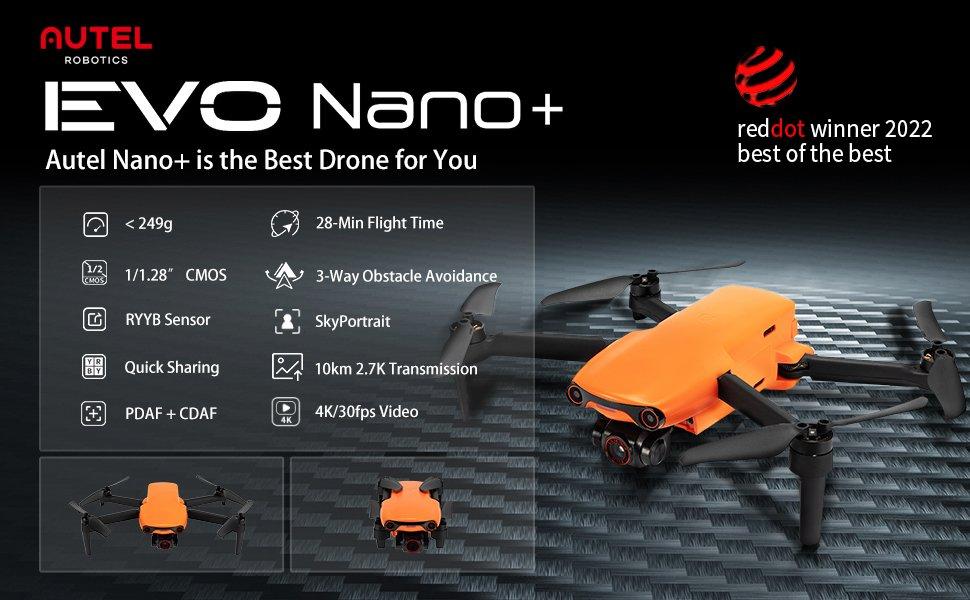
Autel Evo Nano+:
Compared to the Potensic Atom SE, the Autel Evo Nano+ offers better camera performance with up to 50 MP image resolution.
The app also provides more camera settings, and Autel’s transmission system has proven robust in a wide range of scenarios. For those worried about obstacle avoidance, the Nano+ has 3-way obstacle avoidance, which is adequate for most flights and a huge plus compared to a drone without obstacle avoidance.
DJI Mini 3:
The DJI Mini 3 offers a great alternative for people who need a drone that they can also use for professional work. Featuring a larger sensor (1/1.3 CMOS sensor), the DJI Mini 3 can capture images of up to 48 MP and videos at 4K at 30 fps.
The 3-axis gimbal also ensures smooth footage. For those who prioritize flight time, the DJI mini 3 has a flight time of up to 38 minutes with the standard battery and 51 minutes with the plus battery, though the latter makes the drone heavier than 250 grams.
However, while it does offer more intelligent features like Helix, Dronie, or Rocket, it lacks Follow Me Features. Still, the better camera, gimbal stabilization, and more flight time make it a worthy alternative.
HAPPY FLYING!

