Estimated reading time: 11 minutes
In a rapidly evolving world, integrating technology with education is not just something to consider – it’s proving necessary. One technology that could redefine how we approach education is Unmanned Aerial Vehicles (UAVs).
Also known as drones, UAVs were often associated with the military and huge commercial applications due to their complexity and difficulty of access.
However, the latest technological advancements have made it possible to create smaller drones that can be used in classrooms, enhancing hands-on and experimental learning.
Imagine a geography class where students use drones to map their local area and process the data to create maps that help them understand the landscape. Or imagine a situation where drones deliver academic tools to inaccessible areas. Drones have proven to have the potential to improve critical thinking and bring out the creative side of students.
This article will explore the role of drones in the future of education by examining current applications with examples, the benefits of drones in education, and the challenges facing the integration of drones in education.
We aim to illuminate how drones can enhance what students learn, how they learn, and how this helps them in a tech-driven world.
Table of contents
Historical Context:
Drones first appeared in the 20th century, when the military mostly used them in areas too risky for military personnel deployment. This led to the advancement of communication systems, extending the range of drones and how they could be piloted remotely.
The advancements in propulsion and computer systems also made creating smaller but effective drones possible. By the 21st century, drones had become mainstream in the military thanks to improved battery efficiency and sensor technology.
Drones also started penetrating the commercial market in the early 2000s, with the FAA issuing the first commercial drone license in 2006. Industries like construction, filming, surveying, mapping, and agriculture started adopting drones in their operations. This wave is ongoing, with bigger spraying drones being released and payloads like LiDAR payloads being made small enough to fit on drones.
The ability to make miniature drones has now made it possible to make smaller and more affordable drones that can be used in STEM education.
On the other hand, technological advancements have made it possible to build sensors like thermal sensors, multispectral sensors, etc., which can be used to teach topics like environmental science, remote sensing, and photogrammetry.
Additionally, the ability to integrate drones with programming platforms like DroneBlocks has made it possible to use drones to teach coding. Students practice coding by programming the drones to accomplish specific tasks, creating a more hands-on approach to programming.

Amazon Prime is giving 6-month trial for $0
All 18-24 year-olds and students welcome.
Start your six month trial
Applications of Drones in Education:
As we have established, drones have a wide range of applications in different industries. This makes them a versatile tool even for teaching, since they can be used in other disciplines. Below are some main applications of drones in education.
STEM Education:
STEM (Science, Technology, Engineering, and Mathematics) is one of the main areas in which drones are at the forefront of advancing education. This is because they introduce students to the laws of physics, computer science, and robotics.
For instance, drones can be sold as kits, and the students have to figure out each needed component, how it works, and how it fits into the drone, teaching them the hardware engineering concept.
Students are also introduced to aviation principles by learning the mechanics of flight and aerodynamics, and they even practice designing some drone components and printing them using 3D printers.
When it comes to operating the drone, the students can program it to fly a certain pattern or accomplish a specific task when it reaches a destination, which also teaches them some basic computer science.
A good example is the DJI Tello drone (now discontinued), which allowed students to learn how to program through Scratch and Python programming languages. DroneBlocks is another example that offers drone-based STEM solutions for education.
Besides learning the various concepts, drones also teach the kids the aspect of teamwork by allowing them to work together on multiple projects. For instance, an instructor can give them a problem to solve using drones, like creating a drone delivery solution. Drone soccer tournaments, for instance, require students to come together and form a team to play against another team.
The students also get to build the drones they use for the sport, and if the drone crashes, they get to learn how to fix it. This teaches them engineering concepts and improves motor skills and hand-eye coordination, as they need a lot of focus to control the drones.

Geographical and Environmental Studies:
Drones for education are not just limited to toy drones for classrooms. As we established earlier, drones have applications in the real world, and they can be used to teach various concepts.
For instance, drones have become very instrumental in surveying and mapping, and you don’t need a costly drone to create a detailed map.
In a geography class that teaches physical features, landscapes, and other phenomena, drones can be deployed to quickly map these areas to create orthomosaics and 3D models for the students to better understand what they see.
Students can also use drones to study the environment in real life by observing animals, albeit at a safe distance, so as not to scare the animals away.
Students can also use drones to create detailed maps of land use changes to be used in educational materials. Multispectral sensors can also help create index maps, such as NDVI maps, to assess the health of the vegetation.
Thanks to these applications, drones can be used at all levels of education, with a lot of Undergraduate and Postgraduate programs now introducing drones as part of their curriculum.
Reach Inaccessible Areas:
Drones have become more useful due to their ability to access areas that would be difficult and unsafe to access by foot or by vehicle. They have brought this benefit to the education sector.
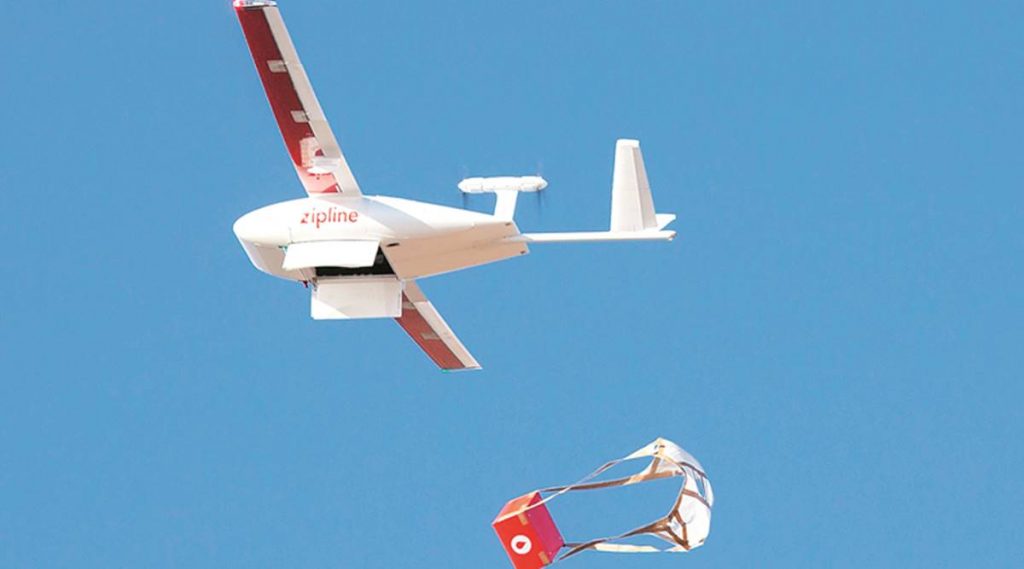
For instance, drone delivery has been quite popular for medical deliveries, food, and other packages. However, there have been instances where drones have delivered educational materials in areas where people could not access them.
A good example is in 2023, when Zipline used its drones to deliver academic materials to a flooded area in Nigeria, allowing the students to do their national exams on time.
Due to their versatility, drones can also be used to reach inaccessible or locked-out areas such as archaeological sites, cultural heritage sites, rainforests, etc.
Practical Skill Development:
Did you know that drone piloting is a career in itself? Due to the increase in drone adoption in various industries, there is an increase in demand for skilled drone pilots. So, introducing drones in schools not only equips students with other skills but also makes them better pilots who could use those skills to earn a living. Industries like surveying and mapping, agriculture, filming, and inspections are some of the industries that require skilled pilots.
As we have established, students also learn how to program and repair drones, providing a career trajectory to drone manufacturing or creating software for drone operations.
And learning how to collect and interpret drone data also prepares the students to work in industries that require GIS and data analysis skills.
Inspire Creativity and Interdisciplinary Learning:
Drones are not limited to technical learning. They can also help bring out the creativity in students. If students are more inclined to art and photography, they can explore how to use drones to create stunning aerial visuals. There are even awards given to the best drone photographers, showing that it’s a career worth looking into.
Since drones work in different industries, introducing them in education allows students to combine different disciplines. For instance, creating a drone solution for humanitarian aid requires understanding the engineering, geography, logistics, and ethical aspects.
Challenges Facing Integrating Drones in Future Education:
While drones have a lot of potential to revolutionize education, there are major challenges that would prevent us from seeing their full potential. These include;
Cost:
While getting cheaper drones for classwork is possible, the costs add up when you have to cater to several students. On the other hand, more advanced drones with various sensors for data collection aren’t cheap. This makes it difficult to suggest purchasing drones, while there are other cheaper materials (though not as effective) that could be used to teach.
The higher cost would also create even more disparities between the schools that can afford the drones and those that can’t.
Lack of Trained Personnel:
Another issue that arises with integrating drones integration is the lack of skilled personnel who can effectively use drones in their workflow. Training these teachers so they could then teach the students would also be time-consuming and expensive.
Regulatory and Safety Issues:
Drone usage is governed by various regulations that could hinder it from being used in an educational setting. For instance, some regions prohibit or limit the usage of drones within or close to a school. Before using drones in a school, one would need to apply for approvals, which would take a long, and there is no guarantee of approval.
Besides regulatory concerns, drones also pose a safety concern to students, teachers, and anyone within the school since they could crash, causing injuries and property damage. Some students or people with access to drones could also use them for malicious activities.

Operational Challenges:
Drones have challenges, limiting how well they can be used in other industries, which applies to the educational setting. These include;
– Some drones have limited flight times, which may limit how often they can be used, and the purchase of several batteries is an additional cost that some schools may not be willing to incur.
– Drones use LiPo batteries, which are very volatile, and mishandling them could cause fire breakouts.
– Drones have a steep learning curve, especially when dealing with complex sensors and software.
– Drones crash frequently, and those used in a classroom setting may not be very reliable. This increases the operational cost due to various repairs and replacements.
Ethical and Privacy Considerations:
Drones, especially those with cameras, pose ethics and privacy concerns to those within the school and the facilities that may be close to the school. These considerations become even more profound when students want to use drones to map geographical landscapes where people live.
There is always the concern of infringing on someone’s privacy, and some communities may not be willing to see drones fly over their property.
Acceptance:
As with any new technology, drones face the challenges of acceptance and perception. Some parents, teachers, and students are willing to adopt them, while others may not see them as valuable educational tools compared to traditional methods.
How to Effectively Integrate Drones in Education?
Considering the benefits drones have and the challenges that may hinder their adoption, below are some ways to address these challenges when considering using drones for education.
- Reducing costs and improving access—To address the cost issue, learning institutions can consider government or donor funding, collaborate with drone manufacturers, and explore entry-level drones for teaching basic concepts. This allows them to access drone technology without stretching their budgets.
- Invest in training—Schools should also consider training teachers in drone technology, programming, and data analysis. They can do this by exploring online certifications or tailored training to meet specific requirements. By ensuring well-trained teachers, they can transfer the same education to the students.
- Promote safe and ethical drone usage – To adhere to the regulations, schools should always seek approval to use drones, meet the safety requirements of drone usage, and train students on ethical drone usage. Civil Aviation authorities can also create regulations specific to using drones in a school setting.
- Invest in durable drones—Schools should invest in durable drones or drones designed for the school setting to minimize repair and replacement costs. Training students and teachers on safe drone operations and regular maintenance also goes a long way in ensuring the drones last. Investing in drone simulators where students learn the basics of flying and crashing would also be great, as it helps improve their skill and confidence, minimizing how often they crash the actual drones.
- Create awareness—Before integrating drones in the curriculum, schools should create awareness and gather feedback from teachers, students, parents, and communities that may be directly or indirectly affected by them. This promotes transparency and encourages acceptance.
Conclusion:
Drones have a wide application in education, from STEM education to advancing higher education to developing technological, critical, analytical, and creative skills. While challenges like cost, lack of skilled personnel, regulatory restrictions, and acceptance challenges limit how well drones can be integrated, we are seeing more adoption of drones in the education setting.
The frequent technological advancements and changes in the regulatory landscape, drones can find more use in future education initiatives.
HAPPY FLYING!