Estimated reading time: 6 minutes
While most drones use fixed pitch (FP) technology, there are collective pitch (CP) drones with extra capabilities, such as achieving a negative pitch. That means they can thrust in the opposite direction, allowing for the ultimate fun expression and hobby achievement.
What are collective pitch drones? CP drones are unmanned aircraft with rotors that adjust the pitch so the generated thrust doesn’t directly link to the revolutions per minute (RPM). Their rotors spin constantly with the change in the pitch angle.
Sadly, CP drones have a hovering challenge, as they are relatively unstable during flights.
Fortunately, it’s interesting to learn about CP drone operations. Once you understand the technology, they’re highly responsive, elegant, and smooth to fly.
This article explores the CP drones, their pros and cons, and more.
Read on.
Table of contents
What Are Collective Pitch Drones?
Collective pitch drones are unmanned aerial vehicles (UAVs) with adjustable rotor blade pitch, so the generated thrust isn’t dependent on the rotor RPM. Instead, rotors spin at a constant speed as the pitch angle shifts.
The manually controlled CP drones require you to make constant multiple control corrections collectively to keep them stationary, in a hovering equilibrium state.
When the pitch is neutral, the rotor blades rotate without causing a lift.

What Is a Drone Pitch?
A drone’s pitch is its rotation along the Y-axis (up or down movement), causing forward and backward movement. It’s the angle of the primary rotor blade, measured relatively to the horizontal drone.
Forward pitch increases the power on the rear set of motors, causing the drone to flip over.
In collective drone pitch, the main rotor blade’s angle changes to control lift, while the engine/motor and rotor speeds remain almost constant.
CP drones achieve a negative pitch, depending on the specific rotor design. They can move in the opposite direction.
Amazon Prime is giving 6-month trial for $0
All 18-24 year-olds and students welcome.
Start your six month trial
Their motors push the drone towards the ground at the speed of gravity while managing the total thrust. The drone also moves upside down indefinitely.
With enough skills, you can conduct 3D flights (flying in any direction at any altitude) with a CP drone.
Collective Pitch: Pros and Cons-
Pros:
- High-speed and great control: CP offers faster flight performance with excellent control due to its high RPM.
- Inverted flight: You can set a negative pitch angle for the drone to produce a negative thrust that enhances a positive lift.
- 3D flight capabilities: If you’re a skilled flier, the drone can move from various altitude levels in different directions.
- Wind-friendliness: CP drones fly excellently in windy conditions due to their top-notch wind-tolerance capacity.
Cons:
- High cost: CP drone rotors are more expensive than their fixed counterparts, and their fragility makes them risky for newbies to handle.
- Mechanical complexity: The CP’s long learning curve is tedious, making beginners opt for the fixed pitch before proceeding to the collective option.
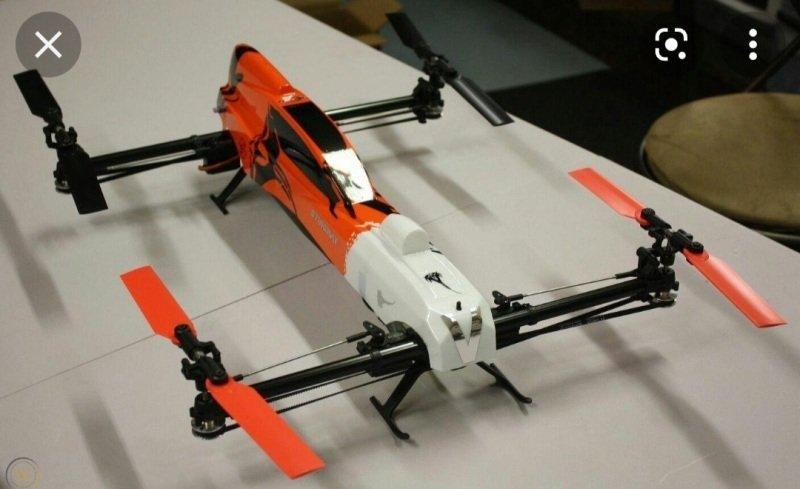
Collective Pitch Drone Example: Stingray 500
Stingray 500 is a unique, fully aerobatic drone with excellent 3D flight performance. It allows forward, backward, and sideways flights and maneuvers such as rolls, loops, and more.
The multirotor flies can turn things around in the multirotor sector due to their fantastic speed.
Its stable and smooth flights are ideal for beginners. The CP drone’s capabilities allow it to thrive in windy conditions and diverse altitudes, which are challenging circumstances for most beginners.
Stingray 500 features a TG-Multi flight control system that facilitates multidirectional controls of your gadget.
The gadget has a simple and durable VP design that withstands harsh weather conditions like high wing levels.
Its pre-painted clamshell body set enhances its appearance and visibility during flights.
Collective Pitch vs. Fixed Pitch Technology:
The main difference between collective and fixed pitch technology is functionality. CP is smoother, more responsive, and more agile to fly.
However, the CP option is more complex to learn, uses a more complicated transmitter, and is more expensive than the FP technology.
Additionally, CP drones have more moving parts, making them prone to breakage and demanding more maintenance.
Fixed-pitch drones are cheaper, mechanically simpler, and easier to replace or repair.
Their manual piloting is relatively slow, making the models easier for beginners to understand.
FP drones are less capable and responsive than their CP counterparts.
Conclusion:
Collective pitch drones feature modifiable rotor blade pitch that generates thrust independent of the rotor’s RPM.
The models have a high-speed and excellent control, thrive in windy conditions, and offer inverted and 3D flight capabilities.
However, CP drones are significantly pricey and mechanically complex. Their long learning curve leads many beginners to use fixed-pitch models to gain experience.
Even so, CP models are fun and offer an exciting learning and flying venture.
While we appreciate the manually controlled collective pitch drones, a remote-controlled camera drone with similar capabilities will take drone technology to a new adventure.
FAQ
What Is Pitch Vs. Yaw?
The main difference between pitch and yaw is the rotation direction. Pitch is the rotation around the side-to-side axis, while yaw is the rotation around the vertical axis (top to bottom through the center).
What Is the Difference Between Cyclic Pitch and Collective Pitch?
Cyclic pitch is the gain or loss of speed, while collective pitch is the gain or loss of speed and altitude. The angling of individual rotor blades on each revolution determines the former, causing upward, downward, or sideways movement. Simultaneous angling of all rotor blades defines the latter.
What Is the Difference Between High Pitch and Low Pitch Propeller Drones?
High-pitch propeller drones have more thrust and speed but less low-end torque, while low-pitch ones have less thrust and speed but more low-end rotation-causing force. Hence, a low-pitch propeller responds faster, changing direction easily and quickly.
How Does Pitch Affect a Drone Flight?
The drone propeller blade pitch determines the lift it produces. A higher rotor blade angle generates more lift, raises drag, and lowers efficiency. On the other hand, a lower rotor blade minimizes lift and drag but increases efficiency.
What Controls Drone Pitch?
The elevator is the drone pitch controller. It tilts up or down on the horizontal tail surface to raise or lower the tail lift.
HAPPY FLYING!

What an excellent post! Reading it was really educational for me. You provided extremely well-organized material, and your explanations were both clear and brief. Your time and energy spent on this article’s research and writing are much appreciated. Anyone interested in this topic would surely benefit from this resource.
Thanks!
Excellent post. Keep writing such kind of info
on your site. Im really impressed by your blog.
Hey there, You have performed a great job. I’ll definitely digg it and in my opinion recommend
to my friends. I am sure they’ll be benefited from
this web site.
Thanks!